

Have you ever wondered why some people wake up refreshed while others feel exhausted, no matter how long they rest? The answer might lie in their nighttime habits. Sleep quality isn’t just about duration—it’s about how you prepare your mind and body for rest.
According to the Sleep Foundation, 42% of adults struggle with insufficient rest. Anxiety, which affects 40 million Americans, often disrupts patterns further. The good news? Small, science-backed changes can make a big difference.
This article explores a holistic approach to improving rest. From creating the right environment to building mindful habits, these practices are designed to help you feel more energized and focused. Ready to transform your nights? Let’s dive in.
Key Takeaways
- Better rest starts with consistent habits.
- Anxiety significantly impacts nighttime patterns.
- Environment plays a key role in improving rest.
- Mindfulness practices can enhance sleep quality.
- Small changes lead to long-term benefits.
Establish a Consistent Bedtime Routine
Your body thrives on consistency, especially when it comes to rest. A predictable schedule helps regulate your circadian rhythm, the internal clock that tells your brain when to feel awake or sleepy. When you stick to a set routine, your body naturally produces melatonin, the hormone that signals it’s time to wind down.
Dr. Rosen, a sleep expert, suggests making gradual changes to your habits. Start by setting a fixed bedtime and wake-up time, even on weekends. Use phone reminders to stay on track. Calculate your ideal bedtime based on when you need to wake up, ensuring you get 7-9 hours of rest.
Weekends can be tricky, but consistency is key. Try to avoid staying up too late or sleeping in excessively. The Sleep Foundation recommends a pre-bed routine lasting 30 minutes to 2 hours. This could include reading, light stretching, or other calming activities to prepare your body and brain for the night ahead.
Create a Relaxing Bedroom Environment
Creating the right atmosphere in your bedroom can transform your sleep experience. Your surroundings play a vital role in helping you achieve a good night sleep. Let’s explore how to optimize your space for better rest.

Optimal Room Temperature
Did you know your body temperature affects how quickly you fall asleep? The Sleep Foundation recommends keeping your bedroom between 65-68°F for optimal rest. This range supports thermoregulation, helping your body cool down and prepare for sleep.
Smart thermostats can make this easier. Set them to adjust automatically as bedtime approaches. This small change can significantly improve your night sleep quality.
The Importance of Darkness and Quiet
Light and noise are two of the biggest sleep disruptors. Studies show that blackout curtains can increase sleep quality by 40%. They block out streetlights and early morning sun, creating a darker environment.
If curtains aren’t an option, consider a sleep mask. Both solutions work, but blackout curtains are more effective for long-term use. Pair them with a white noise machine or app to mask disruptive sounds like traffic or loud neighbors.
For an extra touch of calm, try Lush Sleepy lavender lotion. Its soothing scent can help you relax and drift off more easily.
Limit Screen Time Before Bed
Scrolling through your phone before bed might be the reason you’re tossing and turning. The glow from your devices isn’t just distracting—it’s actively working against your brain’s ability to wind down. Let’s explore why and how you can break this habit.
The Impact of Blue Light on Sleep
Blue light, emitted by screens, suppresses melatonin production by up to 50%. Melatonin is the hormone that signals your body it’s time to sleep. Without it, your brain stays alert, making it harder to fall asleep.
Research from the Sleep Foundation highlights this impact. Even a quick check of your phone can delay sleep onset by up to an hour. Over time, this can lead to chronic sleep issues.
Tips for Reducing Screen Exposure
Start by setting a 30-minute “buffer zone” before bed. This means no screens during this time. Instead, try reading a physical book or jotting down thoughts in a journal.
If you must use a device, activate night mode or a red-light filter. These settings reduce blue light emissions, minimizing sleep disruption. Apps like Calm also offer Sleep Stories, a digital alternative that’s easier on your eyes.
Personally, I’ve found switching to a Kindle Paperwhite helpful. Its e-ink display doesn’t emit blue light, making it a better option for nighttime reading.
Practice Mindfulness Meditation
Ever felt like your mind won’t stop racing when you’re trying to sleep? Mindfulness meditation can help. It’s a simple yet powerful way to calm your thoughts and prepare your body for rest. Studies show it reduces sleep onset time by 40%, making it a game-changer for restless nights.
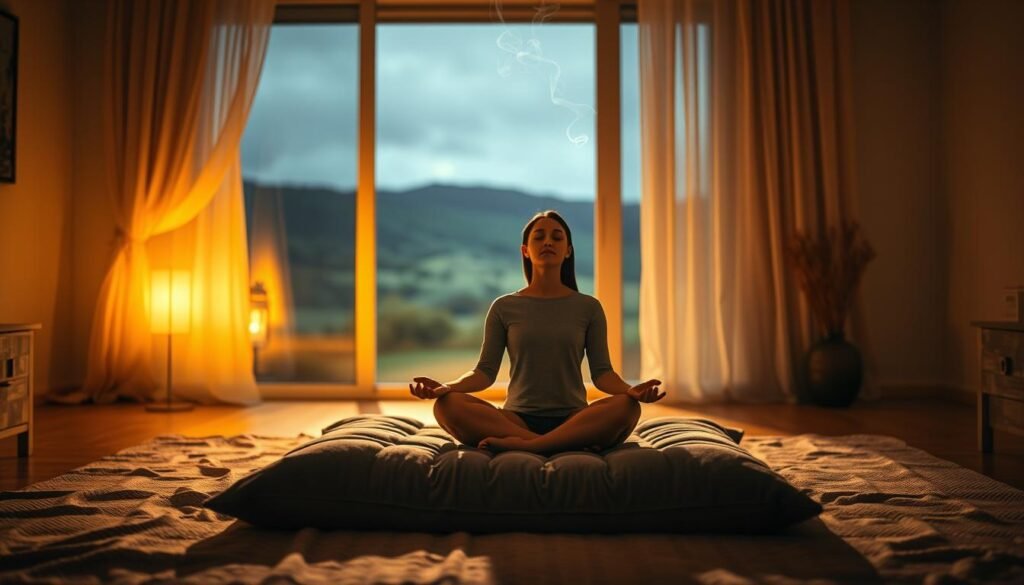
Benefits of Meditation for Sleep
Meditation isn’t just about relaxation—it’s about training your mind to let go of stress. When you meditate, your body produces less cortisol, the hormone linked to anxiety. This creates the perfect conditions for deeper, more restorative sleep.
Yoga Nidra, a form of guided meditation, has been shown to improve sleep quality significantly. It’s like a mental reset button, helping you transition from a busy day to a peaceful night.
Simple Meditation Techniques
Ready to give it a try? Start with the 4-7-8 breathing technique. Inhale for 4 seconds, hold for 7, and exhale for 8. Repeat this cycle a few times, and you’ll feel your body relax almost instantly.
If you prefer guidance, apps like Calm offer meditations like “Glimmering Lake,” designed specifically for sleep. These guided sessions are perfect for beginners. On the other hand, silent meditation allows you to focus inward, free from distractions.
Personally, I’ve found that even 5 minutes of journaling before bed can speed up sleep onset. It’s a great way to clear your mind and set the stage for a restful night.
Enjoy a Warm Bath or Shower
A warm soak before bed might be the secret to deeper sleep. It’s not just about relaxation—it’s science. When you immerse your body in warm water, it helps regulate your internal temperature, preparing you for restful sleep.

How Warm Water Promotes Sleep
Thermoregulation is the key. A warm bath raises your body temperature slightly. When you step out, your temperature drops, signaling your brain that it’s time to sleep. This mimics the natural cooling process that occurs before bedtime.
Research from the Sleep Foundation shows that a bath taken about an hour before bed improves sleep efficiency. The optimal water temperature is between 100-102°F. Adding Epsom salts can enhance the experience by promoting magnesium absorption, which helps relax muscles.
Best Time for a Relaxing Bath
Timing matters. Aim for a bath 60-90 minutes before bed. This gives your body enough time to cool down and transition into sleep mode. If you’re short on time, a warm shower can also work, though it’s less effective for thermoregulation.
For an extra touch of calm, try Dr. Teal’s Sleep Bath products. They combine Epsom salts with soothing scents like lavender, perfect for unwinding. Just be cautious not to overheat—water that’s too hot can have the opposite effect.
Sip on a Calming Herbal Tea
There’s something soothing about a warm cup of tea that can set the tone for a peaceful night. Herbal teas, in particular, are known for their ability to help relax the mind and body, making them a perfect addition to your nighttime routine. Whether you’re dealing with occasional restlessness or chronic insomnia, the right tea can make a world of difference.
Best Teas for Sleep
Not all teas are created equal when it comes to promoting a good night’s rest. Here’s a quick comparison of the top herbal teas known for their sleep-inducing properties:
| Tea | Benefits | Steeping Time |
|---|---|---|
| Chamomile | Increases glycine levels, promoting relaxation | 5-7 minutes |
| Valerian Root | Reduces sleep latency, helps you fall asleep faster | 10-15 minutes |
| Passionflower | Eases anxiety, improves sleep quality | 5-10 minutes |
| Lavender | Calms the nervous system, reduces stress | 4-6 minutes |
| Peppermint | Relaxes muscles, aids digestion | 3-5 minutes |
For sweetness, try adding a drizzle of honey or a splash of almond milk. Avoid teas labeled as “sleep blends” unless you’re sure they’re caffeine-free. Some blends contain trace amounts of caffeine, which can disrupt your rest.
When to Drink Your Nighttime Tea
Timing is key. Aim to enjoy your tea about 45 minutes before bed. This gives your body enough time to absorb the calming compounds and prepare for sleep. Drinking it too close to bedtime might lead to midnight bathroom trips, which can interrupt your rest.
My personal favorite is chamomile with a touch of honey. It’s simple, effective, and feels like a warm hug at the end of a long day. Experiment with different teas to find what works best for you.
Engage in Light Stretching or Yoga
Finding a way to unwind before bed can make all the difference in how you feel the next day. Light stretching or yoga is a gentle yet effective way to prepare your body for rest. These practices help release tension, calm the mind, and improve sleep quality.
Stretching Exercises for Relaxation
Simple stretches can work wonders for relaxation. Focus on areas like your neck, shoulders, and lower back, where tension often builds up. A 10-minute routine can significantly improve your sleep quality, according to the Sleep Foundation.
Here are five stretches to try:
- Neck Rolls: Slowly roll your head in a circular motion to release tension.
- Shoulder Shrugs: Lift your shoulders toward your ears, hold, and release.
- Cat-Cow Stretch: Arch and round your back while on all fours.
- Child’s Pose: Sit back on your heels and stretch your arms forward.
- Legs-Up-the-Wall Pose: Lie on your back with your legs vertical against a wall.
The Legs-Up-the-Wall pose is particularly effective for reducing cortisol levels, helping you feel more relaxed.
Yoga Poses to Promote Sleep
Yoga is another excellent way to wind down. Yin yoga and restorative practices are especially beneficial for sleep. These styles focus on holding poses for longer periods, allowing your body to fully relax.
Here’s a comparison of yin yoga vs. restorative yoga:
| Style | Focus | Duration |
|---|---|---|
| Yin Yoga | Deep stretching, targets connective tissues | 3-5 minutes per pose |
| Restorative Yoga | Relaxation, uses props for support | 5-10 minutes per pose |
Props like bolsters and blocks can enhance your practice. They provide support, making it easier to hold poses comfortably. Yoga with Adriene’s bedtime flow is a great resource for beginners.
However, avoid vigorous exercise in the evening. High-intensity workouts can stimulate your body, making it harder to fall asleep. Stick to gentle movements for the best results.
Journal Your Thoughts Before Bed
Putting your thoughts on paper can be a powerful way to clear your mind before sleep. Journaling helps you process the day’s events, release stress, and prepare for a restful night. According to the Sleep Foundation, just 5 minutes of journaling can speed up sleep onset, making it a simple yet effective habit.
How Journaling Reduces Stress
Writing down your thoughts can act as a mental reset. It allows you to offload worries and focus on the present moment. Research from Calm shows that a gratitude practice can lower anxiety by 30%, making it easier to drift off.
There are two popular journaling styles: bullet journaling and free-writing. Bullet journaling is structured and goal-oriented, while free-writing encourages a stream-of-consciousness approach. Both methods are effective, so choose the one that feels right for you.
What to Write in Your Nighttime Journal
Not sure where to start? Here are three journal prompts to try:
- What are three things I’m grateful for today?
- What’s one challenge I faced, and how did I handle it?
- What’s on my mind that I need to let go of before bed?
The “brain dump” technique is another great option. Simply write down everything on your mind without worrying about structure or grammar. This helps clear mental clutter and promotes relaxation.
When it comes to tools, Moleskine and Leuchtturm notebooks are popular choices. Moleskine offers a classic, minimalist design, while Leuchtturm includes numbered pages and a table of contents for organization. If you prefer digital journaling, apps like Day One provide a convenient way to track your thoughts.
“Journaling is like whispering to one’s self and listening at the same time.”
By making journaling a nightly habit, you’ll not only improve your sleep quality but also set the stage for a more productive tomorrow. It’s a small change with big benefits.
Conclusion: Embrace These Rituals for Better Sleep
Small changes in your evening routine can lead to transformative results. When combined, these practices create a powerful foundation for better sleep and improved overall health. Consistency is key, and committing to a 30-day challenge can help you build lasting habits.
Consider integrating a sleep tracking app to monitor your progress. Apps like Calm offer guided meditations and sleep stories to enhance your rest. Start with their free trial to explore tools designed for a good night’s sleep.
Remember, it’s not about perfection but progress. Each step you take brings you closer to a more restful and energized life. Tonight, as you prepare for bed, repeat this affirmation: “I am calm, I am ready, and I deserve a peaceful night.”
FAQ
Why is a consistent bedtime routine important?
A consistent bedtime routine helps signal to my body that it’s time to wind down. It trains my brain to prepare for rest, making it easier to fall asleep and stay asleep throughout the night.
How can I create a relaxing bedroom environment?
I focus on keeping my bedroom cool, dark, and quiet. I use blackout curtains, adjust the thermostat to a comfortable temperature, and sometimes use a white noise machine to block out distractions.
How does blue light affect my sleep?
Blue light from screens can trick my brain into thinking it’s still daytime, suppressing melatonin production. This makes it harder for me to fall asleep, so I try to limit screen time at least an hour before bed.
What are the benefits of mindfulness meditation for sleep?
Mindfulness meditation helps calm my mind and reduce stress. It allows me to let go of racing thoughts, making it easier to relax and drift off into a peaceful night’s rest.
Why is a warm bath or shower helpful before bed?
A warm bath or shower relaxes my muscles and lowers my body temperature afterward, which signals to my body that it’s time to sleep. I find it especially soothing when done about an hour before bed.
Which herbal teas are best for promoting sleep?
I enjoy chamomile, lavender, or valerian root tea before bed. These teas have natural calming properties that help me unwind and prepare for a restful night.
How does light stretching or yoga improve sleep?
Gentle stretching or yoga helps release tension in my body and calms my mind. Poses like child’s pose or legs-up-the-wall are my go-to for relaxation before bed.
How can journaling before bed reduce stress?
Writing down my thoughts helps clear my mind and process any worries. It’s a great way to unload my thoughts so they don’t keep me awake at night.
What’s the best time to drink herbal tea for sleep?
I like to sip my herbal tea about 30 minutes before bed. This gives me time to relax and enjoy the calming effects without disrupting my sleep with a late-night bathroom trip.
How can I reduce screen exposure before bed?
I set a reminder to put my phone away an hour before bed. Instead, I read a book or listen to calming music to help my mind transition into sleep mode.



Leave a Reply